
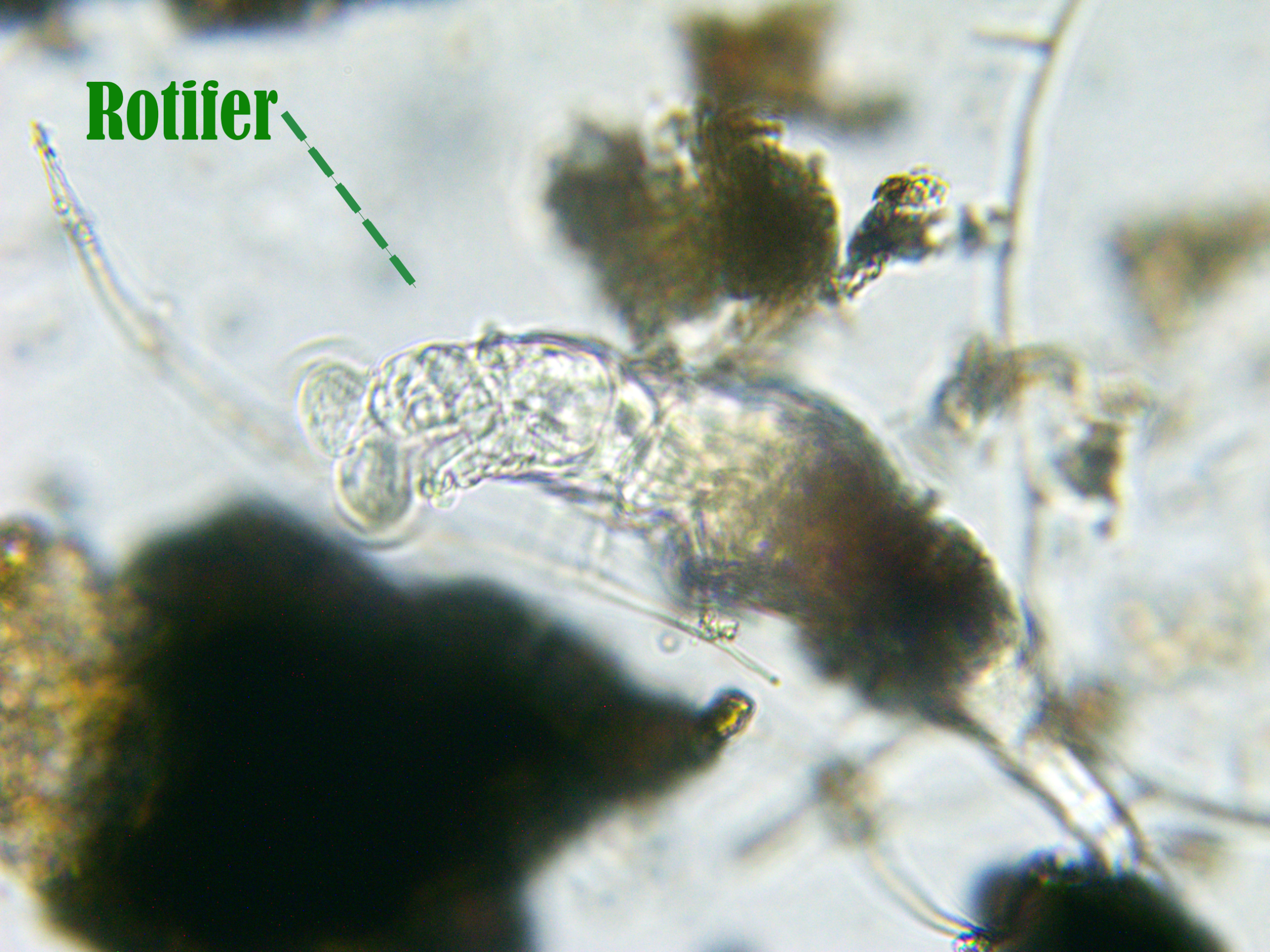
Most people think of soil as dirt — brown stuff that holds plants in place. But healthy soil is actually a living ecosystem, and when you look at it under a microscope, it’s like visiting another world.
At Invasive Industries, we verify every batch of Designer Dirt under the microscope before it leaves our site. Here’s what we’re looking for — and why it matters for your garden.
Bacteria: The Nutrient Cycles
What they are: Single-celled organisms so small you need 400x magnification to see them clearly.
What they do: Bacteria break down organic matter and convert nutrients into forms that plants can actually absorb. Think of them as the kitchen staff — they prep the food so plants can eat it.
In the microscope, bacteria look like tiny dots or short rods. Healthy compost should contain billions of them per teaspoon.

Fungi: The Network Builders
What they are: Thread-like organisms called hyphae (pronounced HI-fee) that spread through the soil like a web.
What they do: Fungi create underground networks that transport water and nutrients between plants. They can extend a plant’s root system by hundreds of times. Some fungi form partnerships with plant roots called mycorrhizae (my-cor-RY-zee) — the plant gives the fungus sugars, and the fungus gives the plant nutrients and water it couldn’t reach on its own.
Under the microscope, you’ll see long strands threading through the soil. We look for both the quantity and the health of these strands.

Protozoa: The Nutrient Releasers
What they are: Single-celled organisms larger than bacteria — you can actually watch them move around under the microscope.
What they do: Protozoa eat bacteria. When they do, they release nitrogen in a form plants can immediately use. It’s like having tiny fertilizer factories in your soil that work on demand.
There are different types — amoebae, flagellates, and ciliates — and each plays a slightly different role. Watching them hunt bacteria under the microscope is genuinely entertaining.

Nematodes: The Good, the Bad, and the Beneficial
What they are: Microscopic worms, usually about 1mm long.
What they do: This depends on the type. Some nematodes eat bacteria and fungi (releasing nutrients, like protozoa). Some eat other nematodes. Some — the ones gardeners worry about — eat plant roots.
The key is balance. Healthy soil has many beneficial nematodes and very few root feeders. When we look at compost under the microscope, we’re checking to ensure we have the right types.

Why This Matters for Your Garden
When all these organisms are present and active, your soil can:
- Hold more water (reducing your irrigation needs)
- Make nutrients available to plants on demand
- Suppress disease-causing organisms
- Build soil structure that roots can easily penetrate
This is what we mean by “biologically complete” compost. It’s not just organic matter — it’s a living system ready to support your plants.
